
blog
お知らせ
2026/10/28 20:26 ~ なし
ブルーベリー品種物語|第13話 ブルーゴールド(Bluegold)
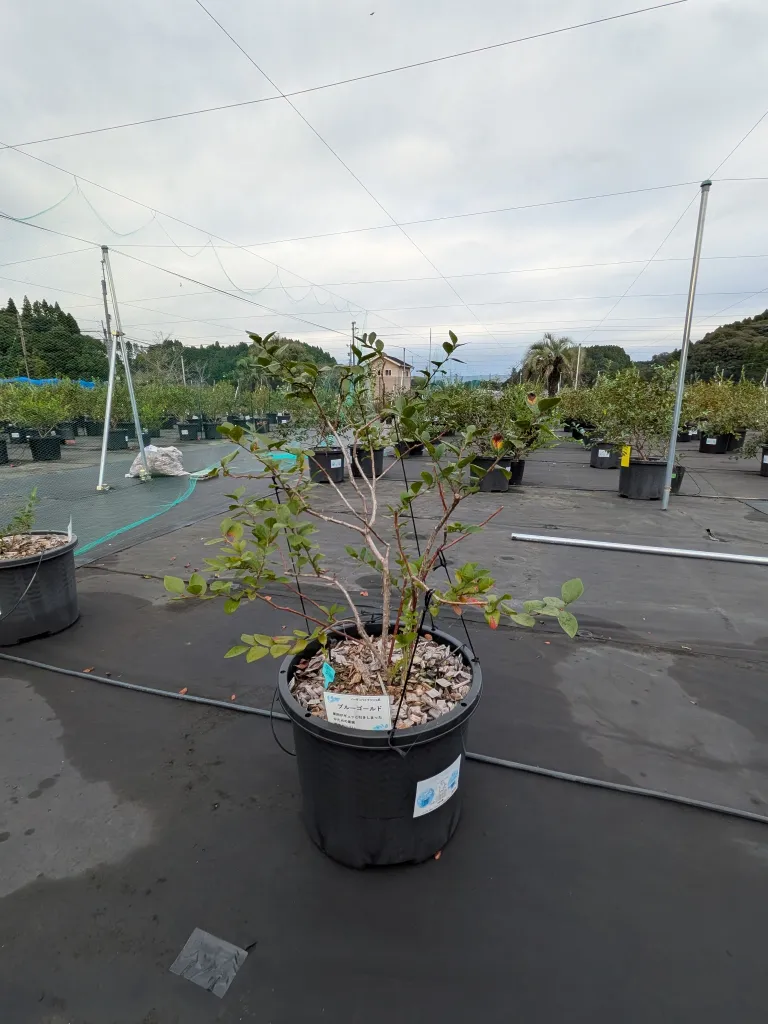
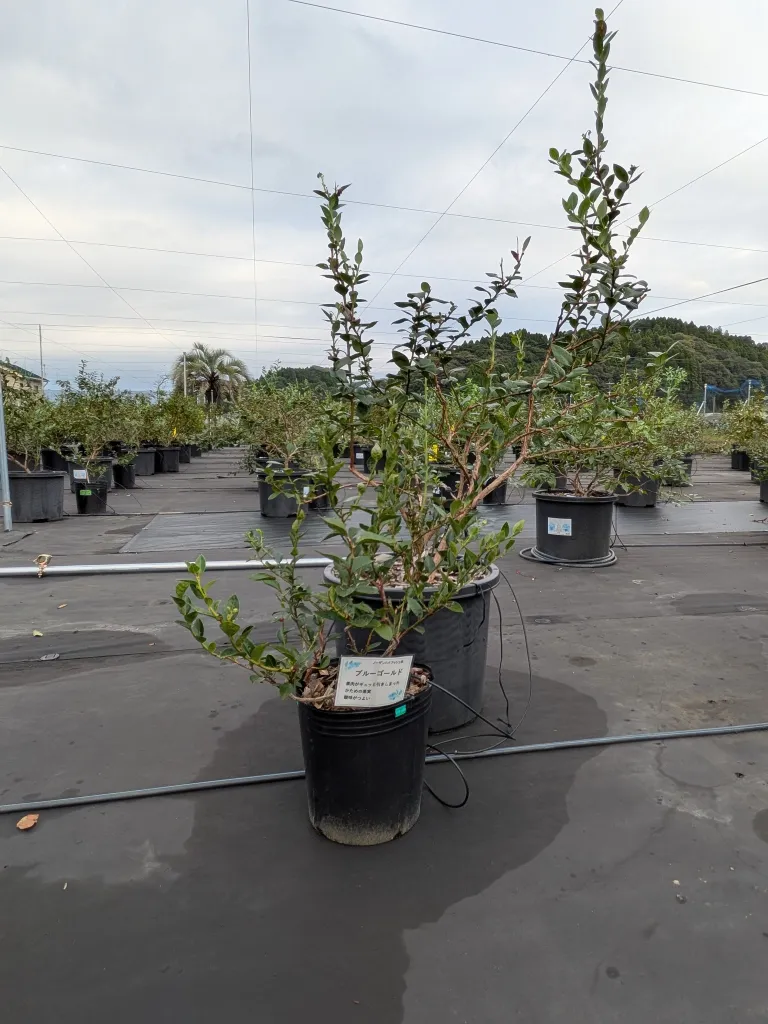
😅 5年かけて育てているのに、いまだに味の印象が薄いブルーベリー。
今回ご紹介するのは、ノーザンハイブッシュの「ブルーゴールド(Bluegold)」です。
ブルーゴールドは、1989年にアメリカで発表された品種。
樹は比較的コンパクトで、枝数が多く、果実は硬くて日持ちがよいとされています。
収量も多く、家庭栽培から商業栽培まで利用されてきた品種です。
🌱 さて、ブルーゴールドの親をたどってみましょう。
ブルーゴールドの両親は、
「ブルーヘブン(Bluehaven)× Me-US 5」
という組み合わせです。
まず、父親のMe-US 5をたどると、
「アッシュワース(Ashworth)× ブルークロップ(Bluecrop)」
という血統です。
ここで登場するブルークロップは、世界中で広く栽培されてきた、ノーザンハイブッシュを代表する品種の一つです。
そして、母親のブルーヘブンをたどると、
「バークレー(Berkeley)× 19-H」
という組み合わせになります。
バークレーといえば、第3話でご紹介した品種ですね。
さらに19-Hには、ローブッシュ系の血統が含まれています。
つまりブルーゴールドは、バークレーやブルークロップといった歴史あるノーザンハイブッシュの血統に、ローブッシュ系の遺伝的背景も加わった品種なのです。
🌿 では、宮崎ブルーベリーの杜ではどうでしょう?
当園では10本を導入しました。
ところが、収穫デビューできたのは、
🫐 3年目:1本
🫐 4年目:3本
🫐 5年目(2027年予定):4本
という状況です。
特に苦労しているのが、過湿による生育不良です。
当園はポットを使った養液栽培ですが、ブルーゴールドは水分管理の影響を受けやすい印象があります。
根の状態が悪くなると、なかなか樹勢が回復しません。
文献では豊産性の優良品種として紹介されていても、宮崎での当園の栽培環境では、決して簡単な品種ではありませんでした。
🫐 そして、肝心の味は?
実は、まだ強い印象が残っていないんです。😅
海外でも食味についてはさまざまな評価があるようですが、当園では十分な収穫量を確保できていないため、まだ自信を持って評価できません。
来年こそは、しっかり育った樹から収穫して、味や香りを確かめたいと思います。
🌱 品種の評価は、実際に育ててみなければ分からない。
同じブルーベリーでも、気候や栽培方法によって生育は大きく変わります。
優良品種とされるブルーゴールドが、宮崎ブルーベリーの杜では苦戦している。
これも、私たちの大切な栽培記録です。
これからも品種の歴史や親子関係をたどりながら、当園での実際の栽培経験をお伝えしていきます。
次回、第14話は「ダロウ(Darrow)」。
こちらもブルークロップの血統を受け継ぎ、あの巨大果で知られるチャンドラーの親となった品種です。
お楽しみに!😊
#宮崎ブルーベリーの杜
#ブルーベリー品種物語
#ブルーゴールド
#ブルーベリー栽培
#温故知新
※この記事は2026年10月時点の記録です。「来年」は2027年を指します。農園での生育や食味の評価は、当園の観察・経験に基づくものです。
Blueberry Variety Stories | Episode 13: Bluegold
日本語 / Japanese ↑ · All stories in English
Five years of growing—and I still cannot clearly recall its flavor! 😅
This episode introduces Bluegold, a northern highbush variety released in America in 1989. It is described as relatively compact, with many branches, firm berries and good keeping quality. Its high yields have led to use in both home gardens and commercial production.
Following Bluegold's family tree
Its parents are Bluehaven × Me-US 5.
The pollen parent, Me-US 5, comes from Ashworth × Bluecrop. Bluecrop is one of the best-known northern highbush varieties, grown widely around the world.
The seed parent, Bluehaven, comes from Berkeley × 19-H. Berkeley appeared in Episode 3. The breeding line 19-H also includes lowbush ancestry.
Bluegold therefore combines the ancestry of historic northern highbush varieties such as Berkeley and Bluecrop with a lowbush genetic background.
A difficult experience at our farm
We introduced 10 Bluegold plants. The number ready for harvest has been:
Third year: 1 bush.
Fourth year: 3 bushes.
Fifth year, planned for 2027: 4 bushes.
Excess moisture and the resulting poor growth have been a particular challenge. Our farm uses pots supplied with water and nutrients together, and our impression is that Bluegold responds strongly to water management. Once its roots are in poor condition, the bush is slow to regain vigor.
The literature may describe it as a productive, high-quality variety, but under our growing conditions in Miyazaki, it has certainly not been easy.
And what about the taste?
Honestly, I still do not have a strong memory of it. 😅 Overseas opinions on flavor also seem to vary, but we have not yet harvested enough fruit ourselves to offer a confident assessment.
In 2027, I hope to harvest from stronger bushes and take the time to check the flavor and aroma properly.
Growing a variety teaches us something the descriptions cannot
The same blueberry can grow very differently depending on climate and cultivation methods. Bluegold, widely described as a good variety, has struggled at Miyazaki Blueberry no Mori. That, too, is a valuable part of our growing record.
We will keep sharing the history and family relationships of varieties alongside what happens when we grow them ourselves.
Next, in Episode 14, comes Darrow—another variety with Bluecrop ancestry, and a parent of Chandler, famous for its enormous berries. Please join us! 😊
These farm observations come from our original 2026 notes. “This year” means 2026 and “next year” means 2027. Growth, flavor and harvest timing describe our own growing conditions; future harvest figures are estimates.
← Episode 12: Brigitta Blue
Episode 14: Darrow →
English story index & visitor guide
