
blog
お知らせ
2026/10/25 20:38 ~ なし
ブルーベリー品種物語|第11話 デューク(Duke)
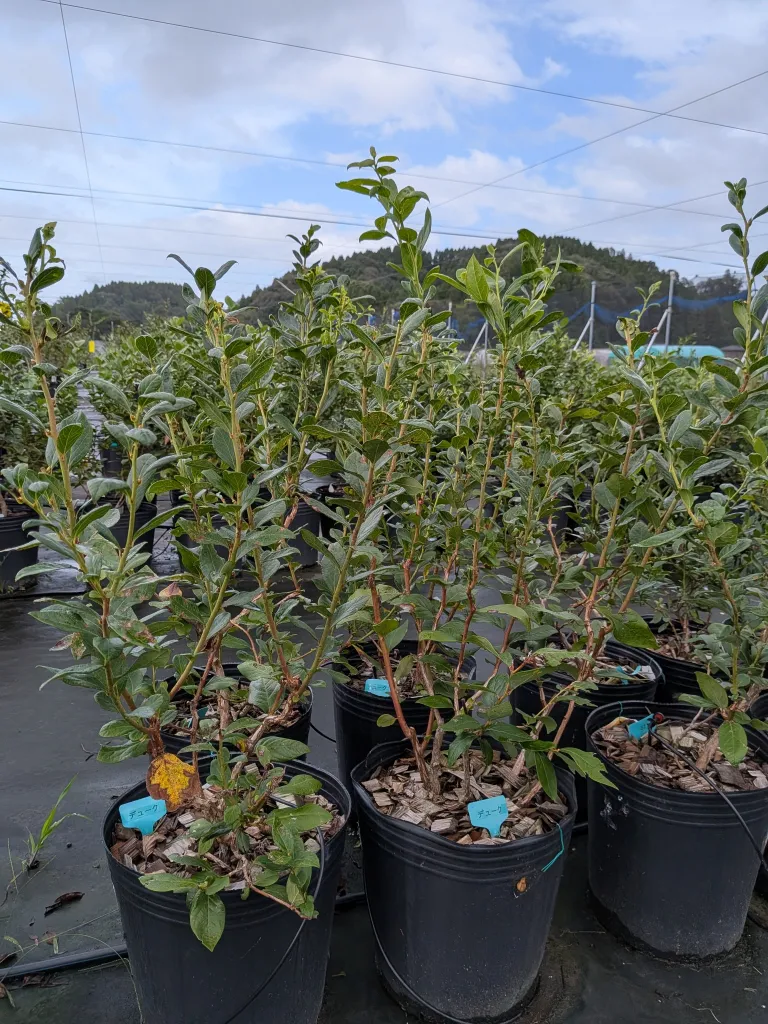
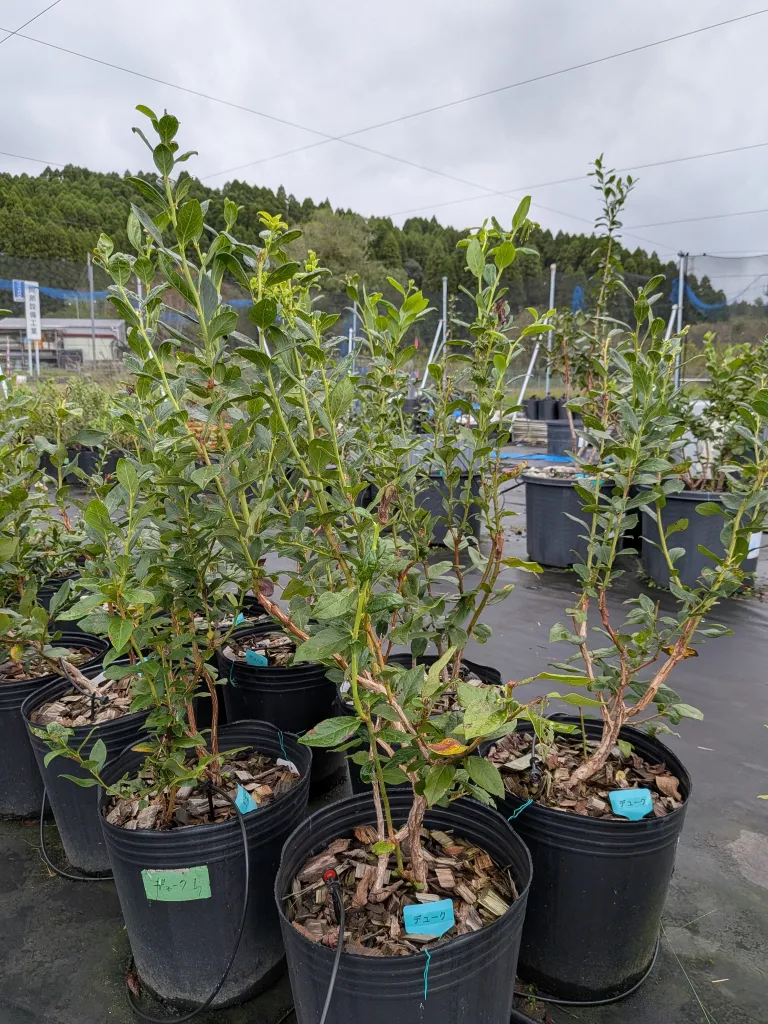
😢 51本も導入したのに、最初にデビューできたのは、わずか2本。
世界中で栽培されている優良品種なのに、なぜ?
今回ご紹介するのは、
「デューク(Duke)」です。
前回のスパルタン、前々回のパトリオットに続き、今回も早生のノーザンハイブッシュ。
デュークは、1987年にアメリカで発表された品種です。
早生で、果実が比較的大きく、硬くて日持ちがよく、豊産性にも優れることから、世界各地で商業栽培されてきました。
早い時期からまとまった量を収穫できる、優秀な品種なんです。
さて、このデュークの親をたどると、
(Ivanhoe × Earliblue)×(E-30 × E-11)
という交配組み合わせに行き着きます。
ここで登場するのが、またまたアーリーブルー(Earliblue)!
パトリオットとスパルタンでは直接の親でしたが、デュークでは祖父母の世代にあたります。
つまり、今回もアーリーブルーの血統が受け継がれているんです。😊
🫐 パトリオット:アーリーブルーを親に持ち、耐寒性に優れる。
🫐 スパルタン:アーリーブルーを親に持ち、大粒で優れた食味を持つ。
🫐 デューク:アーリーブルーを祖先に持ち、早生で豊産性に優れる。
同じ血統を受け継ぎながら、それぞれ違った魅力を持つ品種が生まれてきたんですね。
ブルーベリーの育種の歴史は、本当に面白いものです。
さて、ここからは私たちの農園のお話。
実は、デュークには本当に苦労してきました。
私たちは2年生苗を51本導入しました。
ところが、1年間育苗したところ、大変なことに……。
🫐 14本がコガネムシの幼虫による食害で枯死。
🫐 36本はコガネムシの食害や過湿の影響で生育不良。
根を傷めたブルーベリーは、なかなか思うように育ってくれません。
世界的に評価されている品種でも、栽培環境や害虫被害によって、これほど苦労することがあるんですね。
そして迎えた、初めてのデビュー。
3年目:51本中、わずか2本。
正直、ここまで苦戦するとは思っていませんでした。💦
でも、生き残った木を諦めずに育て続けました。
すると、少しずつ変化が現れます。
🌱 3年目:2本がデビュー
🌱 4年目(今年):3本がデビュー
🌱 5年目(来年):10本がデビューする見込み!
まだまだ本来の豊産性を発揮できているとは言えませんが、ようやく回復の兆しが見えてきました。😊
ちなみに、同じアーリーブルーの血を引く品種でも、
🫐 パトリオット:8本/10本
🫐 スパルタン:38本/42本(接ぎ木)
と、当園での生育状況には大きな違いがあります。
もちろん、デュークは初期のコガネムシ被害が大きく、スパルタンは接ぎ木苗なので、単純に品種の強さを比較できるものではありません。
それでも、同じ農園で育てているからこそ見えてくる、品種ごとの違いがあります。
ブルーベリーは、実を収穫するまでに何年もかかる果樹。
何年もかけて根を育て、枝を伸ばし、ようやく実をつけてくれる。
その一粒には、品種の歴史だけでなく、育ててきた時間も詰まっているように感じます。
51本から始まったデュークの挑戦。
来年は、もっとたくさんの実をお客様に楽しんでいただけるでしょうか?
私たちも、今から楽しみにしています。😊🫐
さて、パトリオット、スパルタン、デュークと、アーリーブルーにつながる早生品種を3回続けてご紹介しました。
次回は、舞台をアメリカからオーストラリアへ!
「ブリジッタ(Brigitta Blue)」
今度は、ブルーベリー育種の歴史で重要な、もうひとつの品種「ブルークロップ」の血統が登場します。
そして、ブリジッタは後に紹介するリバティとオーロラの親でもあります。
親から子へ、そして次の世代へ。
ブルーベリー品種物語、まだまだ続きます。🫐
#宮崎ブルーベリーの杜
#ブルーベリー品種物語
#デューク
#ブルーベリー栽培
#温故知新
【系譜についての補足(2026年10月28日)】
次回予告で触れたブリジッタは、レイトブルーの自然受粉実生から選抜された品種と記録されており、ブルークロップが花粉親であるかは確定していません。詳しくは第12話 ブリジッタ(Brigitta Blue)をご覧ください →
※この記事は2026年10月時点の記録です。「今年」は2026年、「来年」は2027年を指します。農園での生育や収穫期は、当園の観察に基づくものです。
Blueberry Variety Stories | Episode 11: Duke
日本語 / Japanese ↑ · All stories in English
We introduced 51 plants—but only two were ready for their first harvest. 😢
Why did we struggle so much with a variety grown successfully around the world? This time, we introduce Duke, another early northern highbush following Spartan and Patriot.
Released in America in 1987, Duke has been grown commercially in many countries for its early ripening, relatively large, firm berries, good keeping quality and high productivity. It is a variety capable of providing a substantial crop early in the season.
Earliblue appears again
Duke's pedigree is (Ivanhoe × Earliblue) × (E-30 × E-11).
There is Earliblue again! It is a direct parent of Patriot and Spartan, but a grandparent of Duke. The same ancestry has contributed to varieties with different strengths:
Patriot: an Earliblue offspring valued for cold hardiness.
Spartan: an Earliblue offspring with large berries and excellent flavor.
Duke: an Earliblue descendant valued for early ripening and productivity.
Different attractions can emerge from shared ancestry. Blueberry breeding history is fascinating. 😊
A difficult start at our farm
We introduced 51 two-year-old Duke plants. After one year of nursery care, the situation was discouraging: 14 had died from root feeding by chafer beetle larvae, and 36 showed poor growth associated with beetle damage or excessive moisture.
Once blueberry roots are damaged, the plants can struggle to grow as we hope. Even a variety acclaimed worldwide can be difficult when pests and growing conditions work against it.
In their third year, just two of the original 51 plants reached their first harvest. Honestly, we had not expected such a struggle. 💦
Still, we kept caring for the surviving bushes. Gradually, things began to change:
Third year: 2 bushes ready for harvest.
Fourth year, 2026: 3 bushes.
Fifth year, 2027: 10 bushes expected!
We are not yet seeing Duke's full productive potential, but at last there are signs of recovery. 😊
Related varieties, different experiences
Our records for other varieties with Earliblue ancestry are Patriot, 8 of 10 plants, and Spartan, 38 of 42 grafted plants.
These figures cannot simply be used to rank the varieties' strength. Duke suffered substantial early beetle damage, while our Spartan plants were grafted. The starting conditions were different. Even so, growing related varieties at one farm brings their different responses into view.
Blueberries are fruit bushes that take years to reach harvest. They build roots, extend branches and eventually bear fruit. Each berry seems to hold not only a variety's breeding history, but also the years spent caring for the plant.
Our Duke challenge began with 51 plants. Will more visitors be able to enjoy its fruit in 2027? We are already looking forward to finding out. 😊🫐
After three early varieties connected to Earliblue—Patriot, Spartan and Duke—we next travel from America to Australia to meet Brigitta Blue, a parent of Liberty and Aurora.
Pedigree clarification from the Japanese original, October 28, 2026
Our original preview mentioned Bluecrop ancestry in Brigitta. The later correction explains that Brigitta is recorded as a selection from open-pollinated Lateblue; Bluecrop is not confirmed as the pollen parent. Episode 12 explains this uncertainty. From parent to offspring and onward to new generations, Blueberry Variety Stories continues. 🫐
These farm observations come from our original 2026 notes. “This year” means 2026 and “next year” means 2027. Growth, flavor and harvest timing describe our own growing conditions; future harvest figures are estimates.
← Episode 10: Spartan
Episode 12: Brigitta Blue →
English story index & visitor guide
