
blog
お知らせ
2026/11/10 20:28 ~ なし
ブルーベリー品種物語|第19話 シャープブルー(Sharpblue)
🌏 寒い地域のブルーベリーを、暖かい地域でも育てたい!
これまで18話にわたり、主にノーザンハイブッシュの親子関係をたどってきました。
今回からは、育種家たちが新しいブルーベリーを生み出すために、どんな工夫をしてきたのかをご紹介します。
その第1回は、サザンハイブッシュの先駆けとなった「シャープブルー(Sharpblue)」です。
🌱 暖かい地域でも育つブルーベリーを!
かつて、優れた果実品質を持つブルーベリーの多くは、冬の寒さが厳しいアメリカ北部で育成されていました。
ブルーベリーには、冬の休眠から正常に目覚めるために必要な「低温要求量」があります。
しかし、暖かいフロリダでは冬の寒さが足りず、北部の品種では十分な生育や収穫が難しかったのです。
そこで、フロリダ大学の育種家、ラルフ・シャープ博士たちは考えました。
「北部のブルーベリーのおいしさを、暖かい地域でも楽しめるようにできないだろうか?」
🌿 実は、あのアーリーブルーも関係していました!
シャープブルーの祖先をたどると、ノーザンハイブッシュの「アーリーブルー(Earliblue)」や「ディキシー(Dixi)」が登場します。
アーリーブルーといえば、以前ご紹介したコリンズと同じ、スタンレーとウェイマスを親に持つ品種です。
そして、スパルタンやパトリオットの親でもあります。
つまり、これまで紹介してきたブルーベリーの血統が、サザンハイブッシュの誕生にもつながっているんです!😊
一方、ディキシーは、アメリカの初期のブルーベリー育種で生み出された歴史ある品種。
大粒の果実を特徴とする古いノーザンハイブッシュの一つです。
こうした北部の品種が持つ果実品質を、暖かい地域でも生かしたい。
そこで育種家たちが注目したのが、フロリダなどに自生する野生種、Vaccinium darrowii(ダロウィー)でした。
この野生種は、暖かい地域の気候に適応しています。
さらに、シャープブルーの祖先にはラビットアイ系の血統も含まれています。
北部の優れた品種に、南部の野生種の血を取り入れる。
これが、サザンハイブッシュ誕生への大きな一歩となりました。
🧬 ところが、染色体の数が違う!
ノーザンハイブッシュは基本的に4倍体。
一方、野生のダロウィーは2倍体です。
染色体数が異なる植物同士では、交配しても正常な子孫を残すことが難しい場合があります。
しかし、植物には、まれに通常より多くの染色体を持つ花粉や卵が作られる仕組みがあります。
これを「非還元配偶子」といいます。
シャープブルーにつながる育種では、こうした自然の仕組みが染色体数の壁を乗り越える助けになったと考えられています。
そして1976年、シャープブルーが発表されました。
サザンハイブッシュの歴史を切り開いた品種です。
🫐 シャープブルーは、子供たちに大人気!
さて、難しい育種のお話はここまで。😊
シャープブルーの魅力は、なんといっても甘くておいしいこと!
当園でも、子供たちに大人気の品種なんです。
ブルーベリーおかざきさんのホームページでも、その甘さが評価されています。
品種によって甘味や酸味のバランスは違いますが、シャープブルーは子供たちが喜んで食べてくれる、うれしい品種です。
🌸 ところが、栽培する側には悩みも……
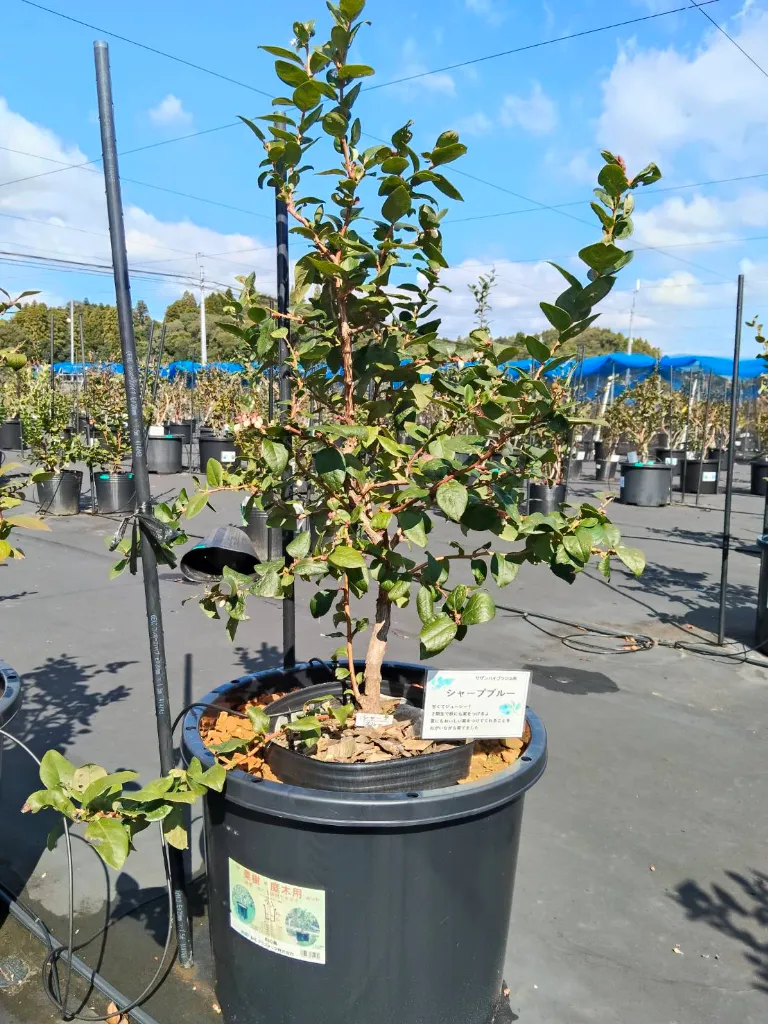
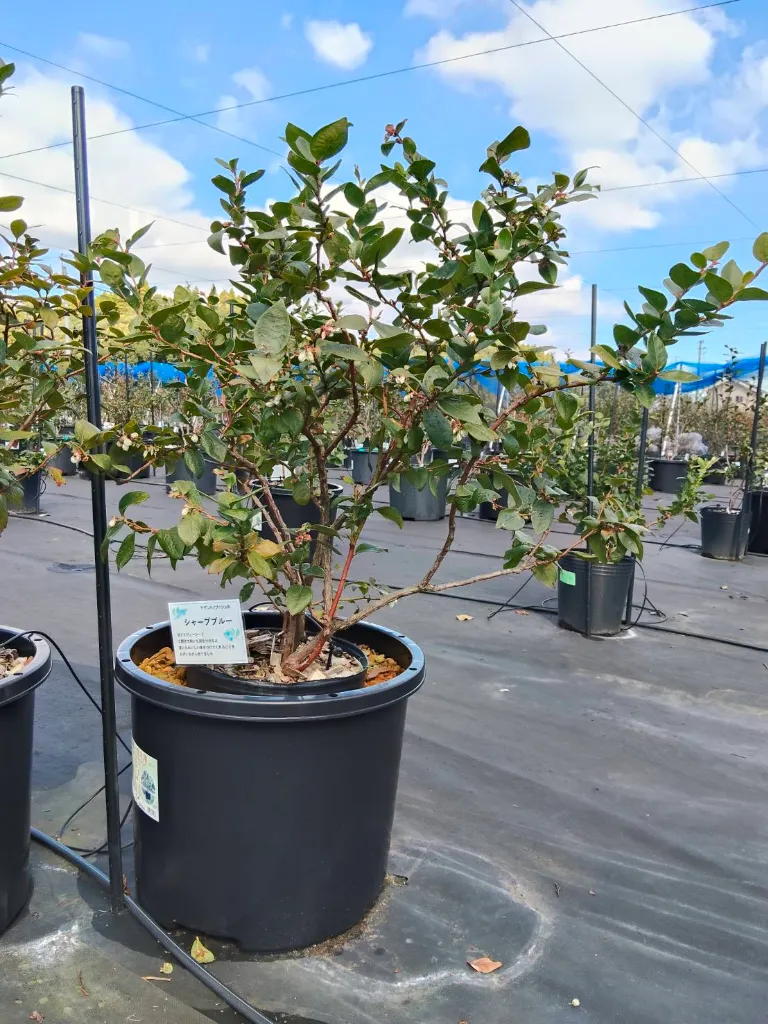
シャープブルーは、秋にも花を咲かせ、実をつけることがあります。
いわゆる「二期なり」です。
お客様にとっては、秋にも実がなるなんて楽しそうですよね。
ところが、栽培する側にとっては、これがなかなか厄介なんです。😅
秋に咲いた花や実を取り除く作業が必要になり、手間がかかります。
ブルーベリーラボ直方のかみちゃんも、この二期なりへの対応が大変なことから、シャープブルーの苗数を減らす方向で考えているそうです。
では、宮崎ブルーベリーの杜ではどうするのか?
今年は、秋の花や実をあえてそのままにして、冬の剪定でまとめて取り除く方法を試しています。
もちろん、秋に実を作ることで樹が養分を消費し、翌年の生育や収穫に悪影響が出る可能性もあります。
でも、毎回花や実を取り除くのも大変です。
そこで今年は、作業の省力化を優先しながら、樹への影響を観察してみることにしました。
果たしてどうなるでしょうか?🤔
🌱 当園では、育成にも苦労しています。
実は、シャープブルーは当園で決して順調に育った品種ではありません。
当初導入したのは50本。
コガネムシ幼虫による根の食害で枯れてしまったり、養生が必要になったり……。
さらに、過湿によって樹勢が弱り、収穫デビューが遅れた樹もありました。
その結果、収穫デビューできた本数は、
🫐 1年目(2025年):14本/50本(28%)
🫐 2年目(2026年):22本/50本(44%)
🫐 3年目(2027年予定):38本/50本(76%)
少しずつですが、収穫できる樹が増えてきました!
さらに、挿し木で7本を追加し、合計57本の栽培に取り組んでいます。
暖かい地域向けに育成された品種だからといって、宮崎で簡単に育つとは限らないんですね。
ただ、3年目には38本のデビューを見込んでいます。
ここまで育ってくれた樹を、これからも大切にしていきたいと思います。
🌏 育種家たちの挑戦は続きます!
アーリーブルーやディキシーといった北部の品種に、暖地に適応した野生種の血を取り入れる。
その長年の挑戦から生まれたシャープブルー。
甘くて子供たちに人気がある一方、二期なりや樹の育成には苦労することもあります。
品種改良によって新しい可能性が生まれても、すべての課題が解決するわけではありません。
だからこそ、育種家たちはさらに改良を重ねていきました。
次回、第20話は「ジュエル(Jewel)」。
シャープブルーから約20年。
フロリダ大学の育種家たちは、どんな改良を進めてきたのでしょうか?
お楽しみに!😊🫐
#宮崎ブルーベリーの杜 #シャープブルー #サザンハイブッシュ #温故知新
Blueberry Variety Stories | Episode 19: Sharpblue
日本語 / Japanese ↑ · All stories in English
🌏 Could blueberries from cold regions be grown in warmer places, too?
For the first 18 episodes, we mostly followed the family trees of northern highbush blueberries. Now we’ll look at how breeders created new varieties, starting with Sharpblue, a pioneer among southern highbush blueberries.
The search for a blueberry for warmer climates
Many blueberries with excellent fruit quality were developed in the northern United States, where winters are cold. Blueberries need a certain amount of winter chill to emerge normally from dormancy. In warm Florida, many northern varieties did not get enough cold to grow and crop well. Dr. Ralph Sharpe and his colleagues at the University of Florida wanted to bring the flavor of northern blueberries to places with milder winters.
Earliblue makes another appearance
Sharpblue’s family tree includes the northern highbush varieties Earliblue and Dixi. Earliblue shares its parents, Stanley and Weymouth, with Collins, and is itself a parent of Spartan and Patriot. Dixi is an early American northern highbush variety known for large berries.
To keep the fruit quality of those northern varieties while adapting them to warmer climates, breeders turned to Vaccinium darrowii, a wild blueberry native to Florida and other parts of the southeastern United States. Sharpblue also has rabbiteye ancestry. Bringing together northern varieties and warm-climate wild blueberries was a major step in the development of southern highbush blueberries.
A difference in chromosome numbers
Northern highbush blueberries generally have four sets of chromosomes, while wild V. darrowii has two. Crosses between plants with different numbers of chromosome sets can struggle to produce viable offspring. On rare occasions, plants produce pollen or eggs with more chromosomes than usual, called unreduced gametes. This natural process is thought to have helped breeders overcome that barrier in the work that led to Sharpblue. Released in 1976, Sharpblue helped open the door to southern highbush blueberries.
A sweet favorite with children
What our younger visitors love most about Sharpblue is its sweetness. It’s a favorite with children at our farm, and Blueberry Farm Okazaki also highlights its sweetness. Different blueberries offer different balances of sweetness and tartness; this one is an especially popular choice with kids.
The challenge of a second round of flowering
Sharpblue can flower and set fruit again in autumn. That sounds fun for visitors, but removing the extra flowers and fruit takes time. Kami-chan at Blueberry Lab Nogata has also spoken about considering fewer Sharpblue plants because of that extra work.
In 2026, we’re trying something different: leaving the autumn flowers and fruit in place and removing them together during winter pruning. Producing fruit in autumn may use resources the bushes need for the following season. We’ll see whether this approach reduces work and watch for any effect on growth or harvest.
How Sharpblue has grown at our farm
We started with 50 plants. Chafer beetle larvae damaged roots, killing some plants and leaving others in need of care. Excess moisture weakened some bushes and delayed their first harvest. By year one (2025), 14 of 50 bushes had reached harvest (28%); by year two (2026), 22 of 50 had (44%). In year three (2027), we expect 38 of 50 (76%). We’ve also added seven plants grown from cuttings and are working with 57 in all. A variety bred for warm climates can still be challenging to grow in Miyazaki.
The work continues
Sharpblue came from years of combining northern varieties such as Earliblue and Dixi with blueberries adapted to warm regions. Children love its sweet berries, even as we work through the challenges of a second bloom and raising healthy bushes. Breeders kept improving on that early work, too. Next, in Episode 20, we’ll meet Jewel and see how the University of Florida’s breeding work progressed over the next two decades. 🫐
