
blog
お知らせ
2026/10/20 21:28 ~ なし
ブルーベリー品種物語|第8話 はやばや星(Hayabayaboshi)
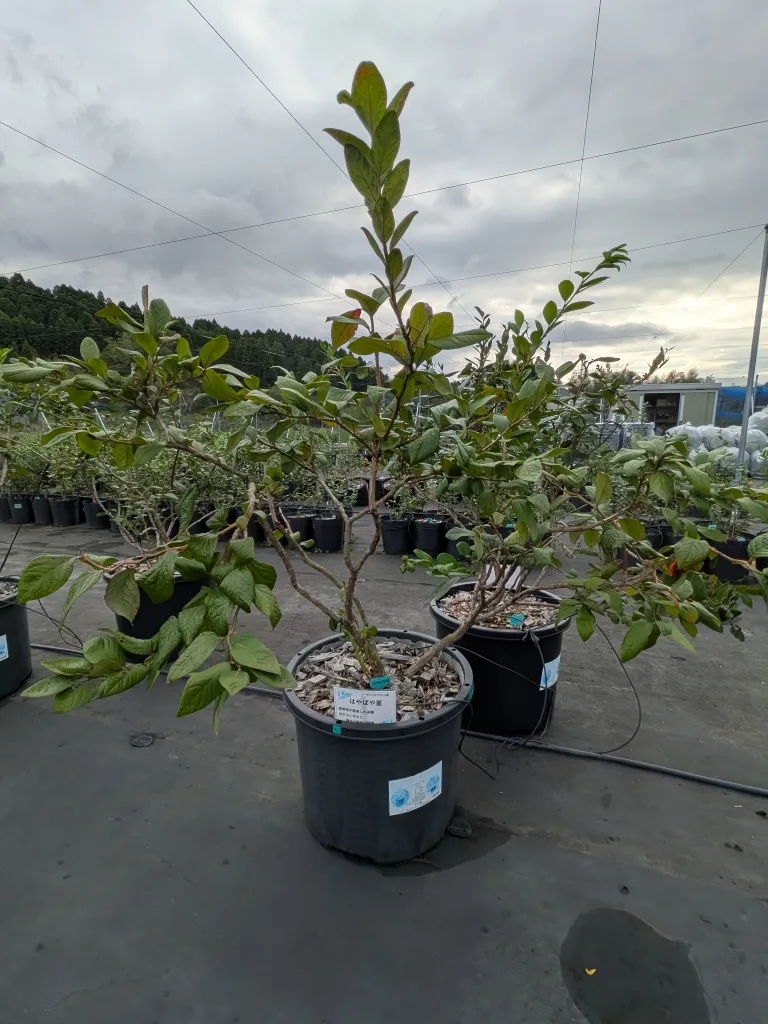
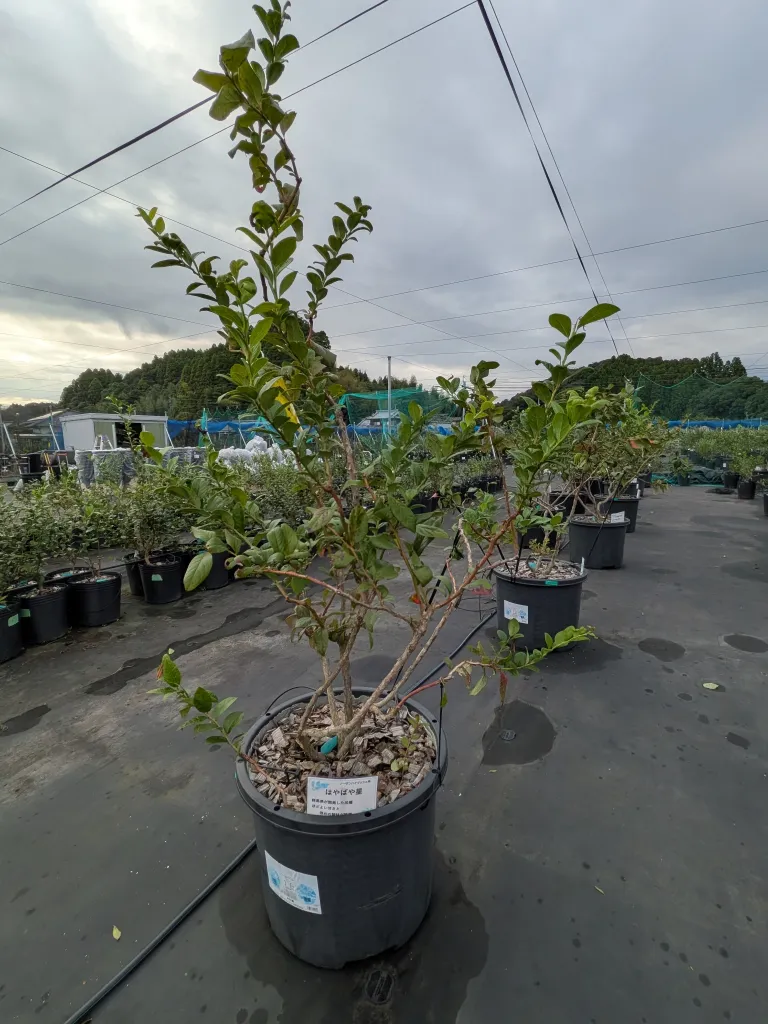
🇯🇵 群馬3兄弟、最後を飾るのは「早生の星」。
前回の「おおつぶ星」、その前の「あまつぶ星」に続いて、今回は群馬3兄弟の最後の品種、
「はやばや星」です。
はやばや星は、群馬県で育成され、2004年に品種登録されたノーザンハイブッシュ系のブルーベリー。
その誕生には、これまで紹介してきた「コリンズ」と「コビル」が関わっています。
この2品種に由来する自然交雑実生から選抜された、日本生まれの品種です。
つまり、今回もルーベルからコリンズへと続く、初期のブルーベリー育種の歴史につながっています。🫐
さて、「はやばや星」という名前。
実は、その名の通り、収穫時期の早さが特徴です。
群馬県の案内では、収穫時期は6月下旬~7月上旬。
育成時の研究では、コリンズよりも収穫最盛期が早く、大粒で酸味がやや強い品種として評価されました。
そして、もうひとつ面白いのが「味」。
群馬県のG-アナライズ&PRチームによる分析では、
🍇 あまつぶ星:酸味が控えめで甘さが引き立つ
🍇 おおつぶ星:味わいが強く濃厚
🍇 はやばや星:甘さが控えめで、酸味が際立つすっきり味
と、3兄弟それぞれの個性が紹介されています。
特にはやばや星は、クエン酸の含有量が豊富という分析結果も。
ブルーベリーは、甘ければ甘いほど美味しいというわけではありません。
甘味と酸味のバランス、香り、果汁の多さなど、品種ごとに違った美味しさがあります。
はやばや星は、そんな爽やかな甘酸っぱさを楽しむ品種なのかもしれません。😊
さて、私たちの農園ではどうでしょう?
群馬3兄弟をそれぞれ4本ずつ導入しましたが、
🫐 あまつぶ星:4本中2本が残存
🫐 おおつぶ星:4本中1本が残存
🫐 はやばや星:4本中4本が残存!
なんと、はやばや星は4本とも元気に育っています。
同じ群馬県生まれの品種でも、宮崎での生育にはこれだけ違いが出ています。
もちろん、これだけで宮崎の暑さに強い品種だと断定することはできません。
でも、実際に育ててみると、品種ごとの個性が見えてくるのは本当に面白いですね。
そして、これから確かめたいのは、宮崎での収穫時期と味わい。
群馬では早生品種ですが、宮崎ではパトリオットやスパルタン、プルなどの早生品種と比べて、どの時期に収穫できるのか。
さらに、群馬県が評価する爽やかな酸味を、私たちの農園でも感じられるのか。
これからも観察していきたいと思います。
これで群馬3兄弟の紹介はひと区切り。
アメリカで始まったブルーベリーの育種の歴史が、日本でも新しい品種を生み出している。
そんな物語を感じていただけたでしょうか?
さて、次回は再びアメリカの品種へ。
「パトリオット(Patriot)」
アーリーブルーと野生ローブッシュの血統を受け継ぐ、早生品種です。
ここからアーリーブルーの血を引く品種たちへと、新しい物語が始まります。😊🫐
#宮崎ブルーベリーの杜
#ブルーベリー品種物語
#はやばや星
#群馬3兄弟
#温故知新
【系譜についての補足】
自然交雑実生からの選抜のため、種子親・花粉親の正確な組合せは特定されていません。コリンズ・コビルは種子源の候補として紹介しています。「群馬3兄弟」は3品種の愛称です。同父母の交配組合せを確認した意味ではありません。
※この記事は2026年10月時点の記録です。「今年」は2026年、「来年」は2027年を指します。農園での生育や収穫期は、当園の観察に基づくものです。
Blueberry Variety Stories | Episode 8: Hayabayaboshi
日本語 / Japanese ↑ · All stories in English
The early-ripening star of the Gunma trio 🇯🇵
After Amatsububoshi and Ootsububoshi, we complete the Gunma trio with Hayabayaboshi. This northern highbush variety was developed in Gunma Prefecture and registered in 2004.
Its breeding background
Collins and Coville appear in its history, too. Hayabayaboshi was selected from open-pollinated seedlings associated with those varieties, connecting this Japanese selection with the early blueberry breeding story we have been following.
A qualification matters here: the exact seed-parent and pollen-parent combination has not been established. Collins and Coville are possible seed sources, not a confirmed parental cross. The nickname “Gunma Three Brothers” does not establish that all three varieties have the same two parents.
An early harvest—and a refreshing taste
As its name suggests, Hayabayaboshi is known for early ripening. Gunma's guide gives a harvest period of late June to early July. In the breeding research, its peak harvest came earlier than Collins, and it was valued for large berries with somewhat stronger acidity.
Gunma's G-Analyze & PR team's taste analysis describes the trio as follows:
Amatsububoshi: mild acidity, with sweetness that stands out.
Ootsububoshi: a strong, rich overall flavor.
Hayabayaboshi: less pronounced sweetness and bright acidity, giving a clean, refreshing taste.
The analysis also found Hayabayaboshi rich in citric acid. Blueberries do not have to be as sweet as possible to be delicious. The balance of sweetness and acidity, aroma and juiciness all contribute to a variety's character. Hayabayaboshi may be one for people who enjoy a refreshing sweet-tart flavor. 😊
How are they doing in Miyazaki?
We introduced four bushes of each Gunma variety. Our remaining plants are:
Amatsububoshi: 2 of 4.
Ootsububoshi: 1 of 4.
Hayabayaboshi: all 4 of 4!
All four Hayabayaboshi plants are growing well. Even varieties developed in the same prefecture have given us very different results here.
Of course, these small numbers do not prove that Hayabayaboshi tolerates Miyazaki's heat better. They do show how interesting it is to observe each variety in practice.
We want to learn more about its harvest timing and flavor here. Compared with our early varieties such as Patriot, Spartan and Puru, when will it ripen in Miyazaki? Will we taste the refreshing acidity described by Gunma? We will keep observing.
This brings our Gunma trio to a pause. We hope these stories have shown how the history that began in America has also led to new varieties in Japan.
Next, we return to America with Patriot, an early variety carrying Earliblue and wild lowbush ancestry. A new part of our journey through Earliblue's descendants begins! 😊🫐
These farm observations come from our original 2026 notes. “This year” means 2026 and “next year” means 2027. Growth, flavor and harvest timing describe our own growing conditions; future harvest figures are estimates.
← Episode 7: Ootsububoshi
Episode 9: Patriot →
English story index & visitor guide
